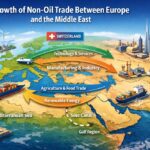
Growth of Non-Oil Trade Between Europe and the Middle East
16 January, 2026
Rising Role of the UAE and Saudi Arabia as Regional Trade Hubs
16 January, 2026
Table of Contents
Expansion of Preferential and Regional Trade Agreements
The Expansion of Preferential and Regional Trade Agreements has become a defining feature of the modern global trade system. As multilateral trade negotiations face increasing complexity and slower progress, countries and regions are turning toward preferential and regional frameworks to secure market access, reduce trade barriers, and strengthen economic cooperation. This trend is particularly visible across Europe, the Middle East, North Africa (MENA), and Switzerland, where trade agreements are increasingly used as strategic tools to support economic growth, diversification, and resilience.
Preferential and regional trade agreements are no longer limited to tariff reductions. They now cover services, investment protection, digital trade, supply chains, sustainability, and regulatory cooperation. For businesses and investors focused on Europe, MENA, and Switzerland, understanding this expansion is essential for long-term planning and market entry.
Understanding Preferential and Regional Trade Agreements
Preferential Trade Agreements (PTAs) allow countries to grant reduced tariffs or improved market access to selected partners. Regional Trade Agreements (RTAs) go further by creating structured economic cooperation within a defined geographic area. Both frameworks aim to facilitate trade by lowering costs, simplifying regulations, and increasing predictability for businesses.
The Expansion of Preferential and Regional Trade Agreements reflects a shift toward flexible, targeted trade arrangements that respond more quickly to economic and geopolitical realities than global agreements.
Key Drivers Behind the Expansion
Economic Diversification and Market Access
Countries in the MENA region are actively diversifying their economies beyond oil. Preferential and regional trade agreements support this goal by opening new export markets for non-oil goods and services, particularly in manufacturing, technology, agriculture, and services. Europe and Switzerland benefit by gaining improved access to fast-growing consumer and investment markets.
Supply Chain Resilience
Recent global disruptions have highlighted the importance of resilient and diversified supply chains. Regional and preferential agreements help reduce dependency on distant suppliers and strengthen regional production networks. This is especially relevant for Europe–MENA trade corridors, where proximity offers logistical and cost advantages.
Geopolitical and Strategic Considerations
Trade agreements are increasingly shaped by strategic interests. Governments use them to strengthen political ties, enhance regional stability, and secure long-term economic partnerships. The expansion of preferential and regional trade agreements reflects a move toward trusted trade networks and strategic alignment.
Europe’s Role in Expanding Trade Agreements
Europe has been a strong proponent of structured trade frameworks. Through bilateral and regional agreements, European countries aim to promote standards-based trade, regulatory transparency, and sustainable development. These agreements facilitate access to European markets while encouraging reforms and regulatory alignment among partner countries.
For MENA economies, alignment with European standards improves export competitiveness and investor confidence, supporting deeper economic integration.
The Growing Role of the MENA Region
The MENA region has significantly increased its participation in preferential and regional trade agreements. Governments are using these frameworks to attract foreign investment, support industrial development, and expand non-oil exports. Agreements often focus on customs cooperation, trade facilitation, and investment protection, creating a more predictable business environment.
As regional connectivity improves, MENA countries are positioning themselves as trade hubs linking Europe, Africa, and Asia.
Switzerland’s Strategic Position
Switzerland plays a unique role in the Expansion of Preferential and Regional Trade Agreements. With a strong network of bilateral trade agreements, Switzerland offers businesses access to global markets through stable legal frameworks and high regulatory standards.
Swiss trade agreements often emphasise services, intellectual property, investment protection, and sustainability. This makes Switzerland an attractive partner for MENA countries seeking advanced technology, financial services, and high-value manufacturing cooperation.
Key Sectors Benefiting from Trade Agreements
Manufacturing and Industry
Reduced tariffs and harmonised standards support cross-border industrial cooperation. European and Swiss manufacturers benefit from easier access to MENA markets, while MENA producers gain entry to high-value European supply chains.
Services and Digital Trade
Modern trade agreements increasingly cover services, data flows, and digital trade. This supports growth in finance, consulting, logistics, technology, and professional services across regions.
Agriculture and Food Trade
Preferential access improves food security and agricultural exports. Trade agreements reduce barriers for agricultural products while supporting food safety and quality standards.
Renewable Energy and Sustainability
Many agreements now include sustainability and environmental cooperation. This supports renewable energy projects, green technologies, and climate-related investment between Europe, MENA, and Switzerland.
Challenges and Limitations
Despite their benefits, the expansion of preferential and regional trade agreements also presents challenges. Overlapping agreements can increase complexity, particularly for businesses operating across multiple jurisdictions. Regulatory compliance, rules of origin, and administrative requirements still require careful management.
However, continued efforts to streamline procedures and improve transparency are helping reduce these barriers.
Long-Term Outlook
The Expansion of Preferential and Regional Trade Agreements is expected to continue as countries seek flexible and strategic trade solutions. For Europe, MENA, and Switzerland, these agreements will play a central role in shaping future trade flows, investment patterns, and economic cooperation.
As global trade becomes more regionalised, businesses that understand and leverage these agreements will gain a significant competitive advantage.
The expansion of preferential and regional trade agreements reflects a fundamental shift in how countries manage international trade. Moving beyond traditional tariff-focused models, these agreements support diversification, resilience, and long-term economic cooperation.
For stakeholders focused on Europe, the MENA region, and Switzerland, preferential and regional trade agreements are not just policy instruments. They are practical frameworks that shape real-world business opportunities and cross-border growth.