Reducing Dependence on Oil and Building Sustainable Growth
16 January, 2026
Expansion of Preferential and Regional Trade Agreements
16 January, 2026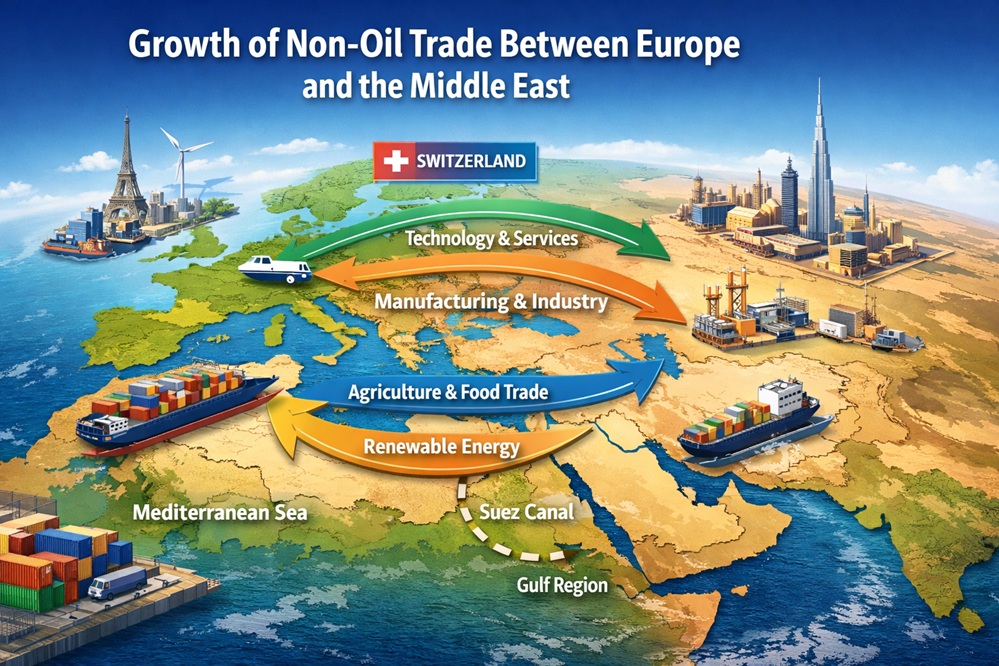
Table of Contents
The growth of non-oil trade between Europe and the Middle East has become one of the most important economic trends of the past decade. As Middle Eastern countries accelerate economic diversification and European markets seek stable, fast-growing partners, non-oil trade is reshaping commercial relations between the two regions. This shift reflects structural changes in global trade, reduced reliance on hydrocarbons, and a growing focus on sustainable, value-added economic cooperation.
Today, trade between Europe and Middle Eastern countries increasingly revolves around manufacturing, technology, services, agriculture, logistics, healthcare, and finance. This transformation is not temporary. It is the result of long-term policy reforms, private sector expansion, and strategic investment on both sides.
Why Non-Oil Trade Between Europe and the Middle East Is Expanding
Economic Diversification in the Middle East
Middle Eastern economies are actively reducing dependence on oil revenues. Governments across the region have launched national diversification strategies aimed at strengthening non-oil sectors, increasing private-sector participation, and attracting foreign investment. As a result, non-oil exports and imports have grown rapidly, creating new trade opportunities with Europe.
Strong Demand for European Expertise and Products
European countries are global leaders in industrial manufacturing, advanced technology, healthcare, engineering, renewable energy, and professional services. Middle Eastern markets have strong demand for these capabilities, especially in infrastructure development, smart cities, energy transition, and industrial modernisation.
Strategic Geographic Position
The Middle East serves as a bridge between Europe, Asia, and Africa. Investments in ports, logistics hubs, and free trade zones have strengthened the region’s role as a global trade corridor. This has made cross-regional trade more efficient and attractive for European exporters and investors.
Key Sectors Driving Non-Oil Trade Growth
Manufacturing and Industrial Goods
Manufacturing is a major driver of non-oil trade between Europe and the Middle East. European exports include machinery, industrial equipment, automotive components, chemicals, and advanced materials. In return, Middle Eastern countries are expanding exports of processed goods, construction materials, and semi-finished industrial products.
Joint ventures and industrial partnerships are also increasing, allowing European companies to manufacture locally while accessing regional markets.
Technology and Digital Services
The growth of non-oil trade between Europe and the Middle East is strongly linked to technology. European firms provide software, cybersecurity, fintech solutions, AI platforms, and industrial automation systems. Middle Eastern countries are rapidly adopting digital transformation strategies, making technology trade and services a fast-growing segment.
Cross-border collaboration in startups, innovation hubs, and research projects is also strengthening economic ties.
Renewable Energy and Sustainability
Renewable energy is a strategic area of cooperation. European expertise in solar, wind, hydrogen, and energy efficiency aligns with Middle Eastern investment capacity and climate conditions. Non-oil trade increasingly includes renewable energy equipment, engineering services, and project development partnerships.
This sector supports long-term sustainability goals and reduces carbon dependency for both regions.
Agriculture and Food Trade
Food security is a priority for many Middle Eastern countries. Europe plays a key role as a supplier of agricultural products, food technology, packaging solutions, and cold-chain logistics. At the same time, Middle Eastern agribusiness exports to Europe are growing, particularly in processed foods and specialty products.
This diversification of food-related trade strengthens resilience against global supply disruptions.
Financial and Professional Services
Non-oil trade is no longer limited to physical goods. Financial services, consulting, legal advisory, project finance, and insurance play an increasingly important role. European financial institutions and service providers support Middle Eastern projects in infrastructure, healthcare, energy, and logistics.
Switzerland, in particular, is a key hub for trade finance, wealth management, and international business structuring related to Middle Eastern markets.
The Role of Switzerland in Non-Oil Trade Growth
Switzerland plays a unique role in the growth of non-oil trade between Europe and the Middle East. As a global financial centre with strong neutrality, regulatory stability, and advanced services, Switzerland acts as a gateway for trade financing, commodity diversification, technology partnerships, and investment management.
Swiss companies are active in pharmaceuticals, precision engineering, medical technology, agribusiness, fintech, and sustainability-focused industries. These sectors align closely with Middle Eastern diversification priorities, making Switzerland a strategic partner beyond traditional EU trade frameworks.
Trade Agreements and Policy Reforms
Trade growth is supported by regulatory reforms and cooperation frameworks. Middle Eastern countries are simplifying customs procedures, modernising trade regulations, and improving transparency. Europe continues to promote standards-based trade, compliance, and quality assurance.
Free trade zones, bilateral agreements, and economic cooperation platforms reduce barriers and improve market access for non-oil trade flows.
Challenges Affecting Non-Oil Trade Expansion
Regulatory Differences
Despite progress, regulatory complexity remains a challenge. Differences in standards, certification, taxation, and legal frameworks can slow down trade processes. Companies must invest in compliance and local expertise to operate effectively.
Logistics and Supply Chain Risks
Global supply chain disruptions have highlighted the importance of resilient logistics. While the Middle East has invested heavily in infrastructure, coordination across borders remains critical for sustained trade growth.
Market Knowledge and Cultural Understanding
Successful non-oil trade requires strong local partnerships and cultural awareness. European companies entering Middle Eastern markets must understand regional business practices, while Middle Eastern exporters to Europe must align with strict quality and regulatory expectations.
Long-Term Outlook for Non-Oil Trade Between Europe and the Middle East
The growth of non-oil trade between Europe and the Middle East is expected to continue over the long term. Economic diversification, population growth, digital transformation, and sustainability policies all support deeper trade integration.
As oil gradually becomes less dominant in regional economies, non-oil trade will define the next phase of Europe–Middle East economic relations. Countries and companies that adapt early, invest strategically, and build long-term partnerships will benefit the most from this transformation.
The growth of non-oil trade between Europe and the Middle East marks a fundamental shift in regional and international commerce. Moving beyond hydrocarbons, both regions are building diversified, resilient, and future-oriented trade relationships.
Driven by manufacturing, technology, renewable energy, services, and finance, non-oil trade is becoming the backbone of Europe–Middle East economic cooperation. For businesses, investors, and policymakers focused on the MENA region and Switzerland, this trend represents a clear and lasting opportunity.